Tag Archive for: featured

Good Home Cookin’ Up On The Mountain

By Brian Kumnick

Nestled peacefully in the Blue Ridge Mountains about halfway between the Shenandoah River and the Appalachian Trail there is a charming little restaurant that serves what might be the best home cooked meal around.

The Pine Grove Restaurant is a real gem just off the beaten path in Bluemont. It has served for years as a community gathering place, first as the grocery store and gas station, later as a restaurant, and now as a paragon of old-fashioned home-style country cooking.

The grocery store was built in the late 1940s by Ralph May and his wife Louise on land purchased with the proceeds from Ralph’s military service in Europe. When Ralph had finished his obligation to the Army, the May family did a thriving little business selling fresh meat, fresh bread (sometimes baked by the Cistercian monks at Cool Spring), bags of ice from the only ice machine on the mountain at the time, and the coldest beer for miles around. They sold beer like it was going out of style. Mr. May drank his own Michelob warm, a habit he apparently picked up in Germany during the war.

The Pine Grove Service Station also had a couple of gasoline pumps, but mostly sold gas to the locals—there just wasn’t enough room to service tractor trailers. In fact, the big trucks preferred to get through that stretch of the old highway as quickly and smoothly as they possibly could because it was not unheard of for a trailer to jackknife at the harrowing Horseshoe Curve.

Eddie May, who grew up in his father’s store, looked after the Pepsi machine. His younger sister Diane had charge of the Coke machine. He reports with satisfaction that he sold more soft drinks because his vending machine offered not only Pepsi, but also Mountain Dew and Kickapoo Joy Juice (a citrus-flavored soda that seems to be making a bit of a comeback). The placid village of Pine Grove, already acquainted with armed conflict, it seems saw some of the early skirmishes of the Cola Wars.

Eddie remembers going down to the Shenandoah Retreat golf course along the river (which had been developed as a country club and weekend retreat in 1952) as a boy, and hunting all night for earthworms. He’d typically collect a five-gallon bucket full of nightcrawlers and sell them as bait at the store. The dollar a dozen he’d collect was his allowance. When bait was scarce, he’d sometimes get the price up to $1.25 or even $1.50 per dozen worms, a most profitable return. A hint of nostalgia crosses his features as he recalls the days when they sold gas for 30 cents a gallon and cigarettes for a quarter a pack.

Eddie also spent many happy hours as a teenager hunting for artifacts back by the creek behind the store and down at the river’s edge. Over the years he gathered quite a collection of arrowheads, and also Minié balls, US Army belt buckles and breastplates, and even the odd bayonet left over from the Civil War.

The Civil War had shattered the peace of the Blue Ridge in the midsummer of 1864. The old Colonial Highway, which in the late eighteenth century was a toll road between Snickers Gap at the top of the mountain and Snickers Ferry down at the river (and was overseen by Edward Snickers himself back when young George Washington was surveying the area), saw a good deal of military traffic in the first weeks of July that year.

After his failed attack on the Washington, D.C. defenses at Fort Stevens on July 11, 1864, Confederate Lieutenant General Jubal Early retreated along that highway into the Shenandoah Valley and set up headquarters at Berryville. The pursuing federal army took control of Snickers Gap (which now divides Loudoun and Clarke counties) and set up artillery covering the western slopes of the Blue Ridge down to the Shenandoah River. Major General John Gordon’s division was left to guard the river crossing at Castleman’s Ferry (a.k.a. Snickers Ford), which it did successfully against several Union attempts to get across.

On February 18, 1864, the Union did a reconnaissance in force, crossing the river at the island fords about a mile upriver from the ferry. The armies clashed. The ensuing battle claimed nearly 850 casualties. In the confusion of the battle, a number of Union soldiers leapt unwittingly into the deep water at Parker’s Hole and drowned. Stories have been told of bass fisherman fifty years later thinking they had made the catch of a lifetime only to pull an old musket from the dark waters.

By 1973, it was clear to Mrs. May that the time had come to sell the store while it might still be sold. Plans were in the works for Route 7 to be expanded, and to bypass Pine Grove. In the summer of 1973, she sold the property to Earl and Shirley Tomblin, who converted the store into a restaurant. Five years later the Tomblins sold the restaurant to Eddie and Dorothy Stone, who ran it until 1994, when they sold it to Malcolm and Shirley Brown and their partner, Geoff Cole, whose family still visits the restaurant. Joan Farris bought it in 1999, and in 2001 sold it to Glen Poe—who owns it today.

The Route 7 expansion and straightening did wonders for commuters who live west of the Shenandoah River. The new four lane road, known now as Harry Byrd Highway, carries thousands of drivers into and out of the Washington, DC metropolitan area every day. But many of them race across the mountain completely unaware that such a village as Pine Grove even exists.

The Pine Grove Restaurant has gone through many changes over the years, some ups, some downs, some successes and some difficulties. It seems at last to have hit its stride. After a number of years of starts and stops, three years ago Glen Poe met Phyllis Mainhart. He felt she could revive the authentic country cooking and casual family
atmosphere for everyone to enjoy.

Phyllis says she wasn’t really looking for another business venture, but a couple of old friends heard that the restaurant was coming available. And because she had successfully run a similar country restaurant in Stephen’s City some years earlier, these friends called her and said, “Why don’t you take that place on?”

Phyllis and Glen both had a clear—and very similar—idea of what would work in terms of food, service and atmosphere. Phyllis’ vision was simple: “I wanted it to be the best home cooked meal around, the best home cooking restaurant in the area.” With loyal support from family members and long time local residents who work in the restaurant either serving or cooking, that vision has become a reality. All of the food is homemade, from scratch, and largely from old family recipes. Her sisters bake pies and whip up chicken salads, potato salads, macaroni salads and even broccoli salads that have to be tried to be believed.

The whole enterprise has the feel of a family effort, a community effort. They strive to use local products, growing many of their vegetables either on site or in the gardens at the Mercer farm. They buy their meats and sausages locally, like the beef from Audley Farms in Berryville—fresh, antibiotic- and hormone-free. They use only the freshest eggs, which are served in one of their breakfast masterpieces: the Clarke County Eggs Benedict. This is serious country cooking. It’s an open faced biscuit topped with fried eggs and sliced ham, smothered in sausage gravy, and served with a side of home fries. Just imagine. The Buckwheat & Blueberry pancakes are also quite a hit.

Pine Grove Restaurant also has a small farm market. They continue to expand the
offerings of local delicacies. You can buy local honey,
organic farm eggs, even whole fresh homemade pies.
Phyllis’ son Eddie raises grass fed organic beef which they sell whole or in parts. They’ve raised organic Cornish game hens and turkeys for
Thanksgiving—which always sell out in
short order. They even do
some gluten free items and are looking
to add more. Pretty soon
they’ll be adding ice-cream
and milkshakes.

Pine Grove has patrons from all over the region, near and far. From Phyllis’ old schoolmates and other local regulars, including church groups, to motorcycle clubs from the city, bicyclists, and hikers passing by on the Appalachian Trail, the restaurant has become a lively gathering place. A couple from Alexandria makes a regular weekend trek just to enjoy breakfast on the front deck in the summertime. A large table in the back room that seats 25 comfortably has been used for rehearsal dinners, birthdays, and other large family gatherings.

The restaurant opens at 7am, seven days a week, and serves until 8pm, Monday through Saturday and until 2pm on Sundays. And by the way, serving until eight means exactly that: If you arrive at 7:55 pm, they will happily serve you dinner and allow you to eat it at your leisure, in peace. Breakfast is served all day every day, in addition to lunch and dinner.

Most who have enjoyed the wonderful atmosphere, friendly service and the fantastic food at the Pine Grove Restaurant subscribe to a simple truth: That is one good old-fashioned home-style country meal!
Growing Up From Tyke To Trike

By Samantha Piggott

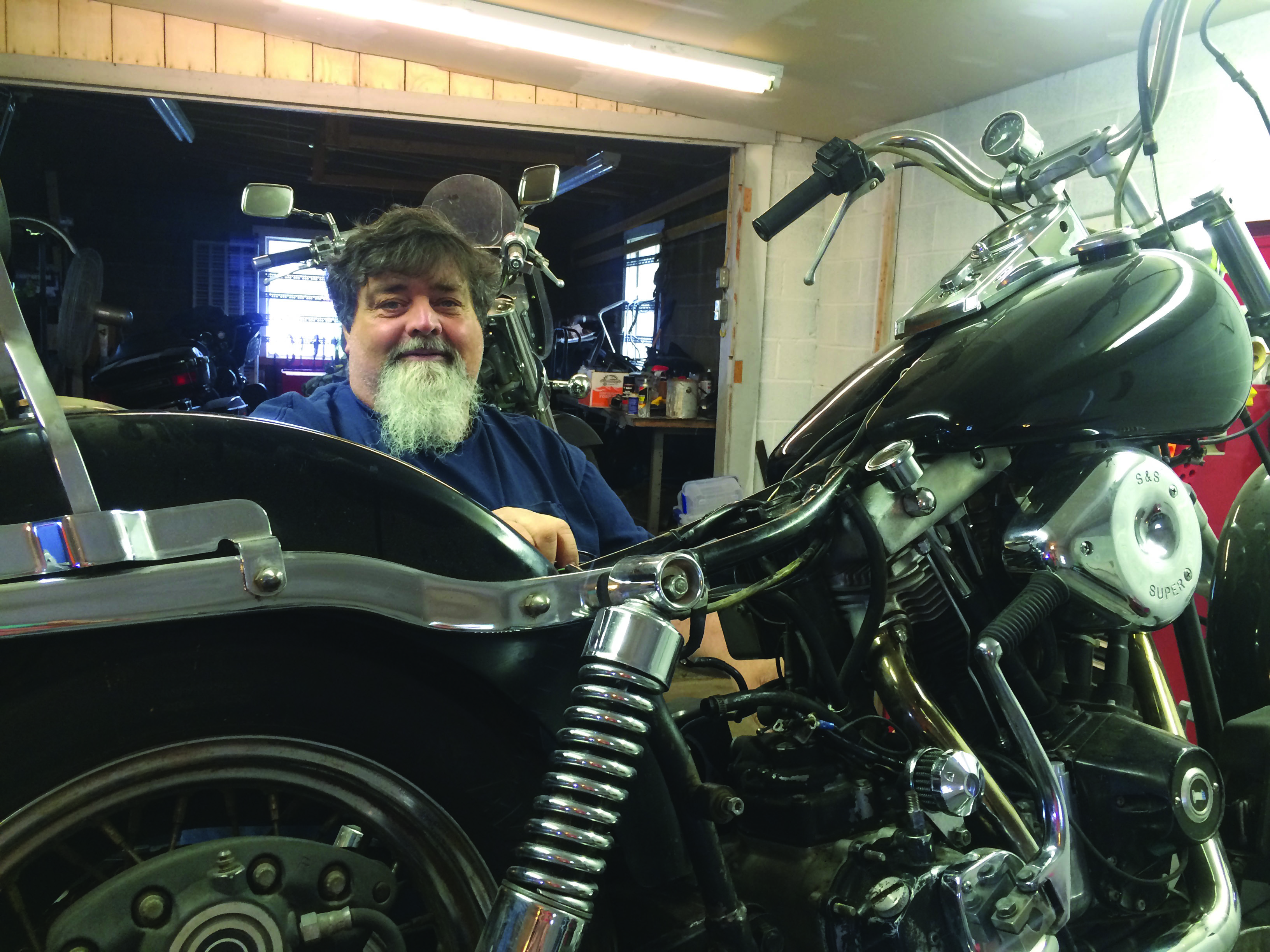
Want to meet a cool cat in Berryville? Head on down to Kenny’s Auto and Trike on Buckmarsh Street. Kenny has been turning wrenches for 40 years. His first Craftsman tool set came under the tree at Christmas when he was 7 years old. He proceeded to use it to build himself a mini motorbike at 8.

Growing up, Kenny’s family didn’t have a lot of extra money; he saw all his friends in the neighborhood getting mini bikes and other cool toys. He figured out young that if he wanted to keep up he would have to start building his toys himself. And he hasn’t stopped yet. As a matter of fact Kenny will tell you proudly that he still has most of the tools from that first Craftsman set. That is not surprising considering the immaculate condition of Kenny’s shop. There is not a tool out of place or a puddle of oil to be trod through.

Trikes have been growing in popularity. The baby-boomer crowd loves the idea of a motorcycle with the stability of three wheels. For Kenny the trike journey began about eight years ago when his wife wanted to start riding motorcycles. She, however, had been in a car accident, so a traditional bike just wasn’t an option. So Kenny researched every conversion package he could find. It took a while to land on DFT conversion sets. After converting a bike for his wife to enjoy, he was so impressed with the quality and intrigued with the process that he knew this was a brand he could represent.

He explains there are  differences between a stock model trike and a conversion. “Our conversions have an independent rear suspension; they are more comfortable to ride, and offer better handling,: Kenny explains. “The store bought trikes are a straight axel. There’s a huge difference.”

According to Kenny, not every bike is trikable—yes, that’s a technical term. Only certain models will do, and it’s not possible to convert a sport or racing-style bike. The conversion process takes about three weeks start to finish.

Kenny’s doesn’t just do trikes. Kenny himself is an ASE Master Technician for autos, trucks and heavy-duty trucks. With his two full-sized lifts he has plenty of working room in the main garage for cars and trucks. On the day I visited, Kenny’s team was rebuilding the rear end of a Chevy 2500 truck. The shop handles all types of jobs, suspension and lift kits to air-conditioning or replacing engines and transmission. Kenny’s uses Jasper engines and transmissions because they have a great reputation and he has had a lot of success with them.

Why go to Kenny’s? His no nonsense professional approach, “I tell it the way it is. I don’t sugar coat it,” he says, adding, “We get the work done, and we get you back on the road.”

Livng the Full Life at Life More Abundant Ranch

By Annie Young

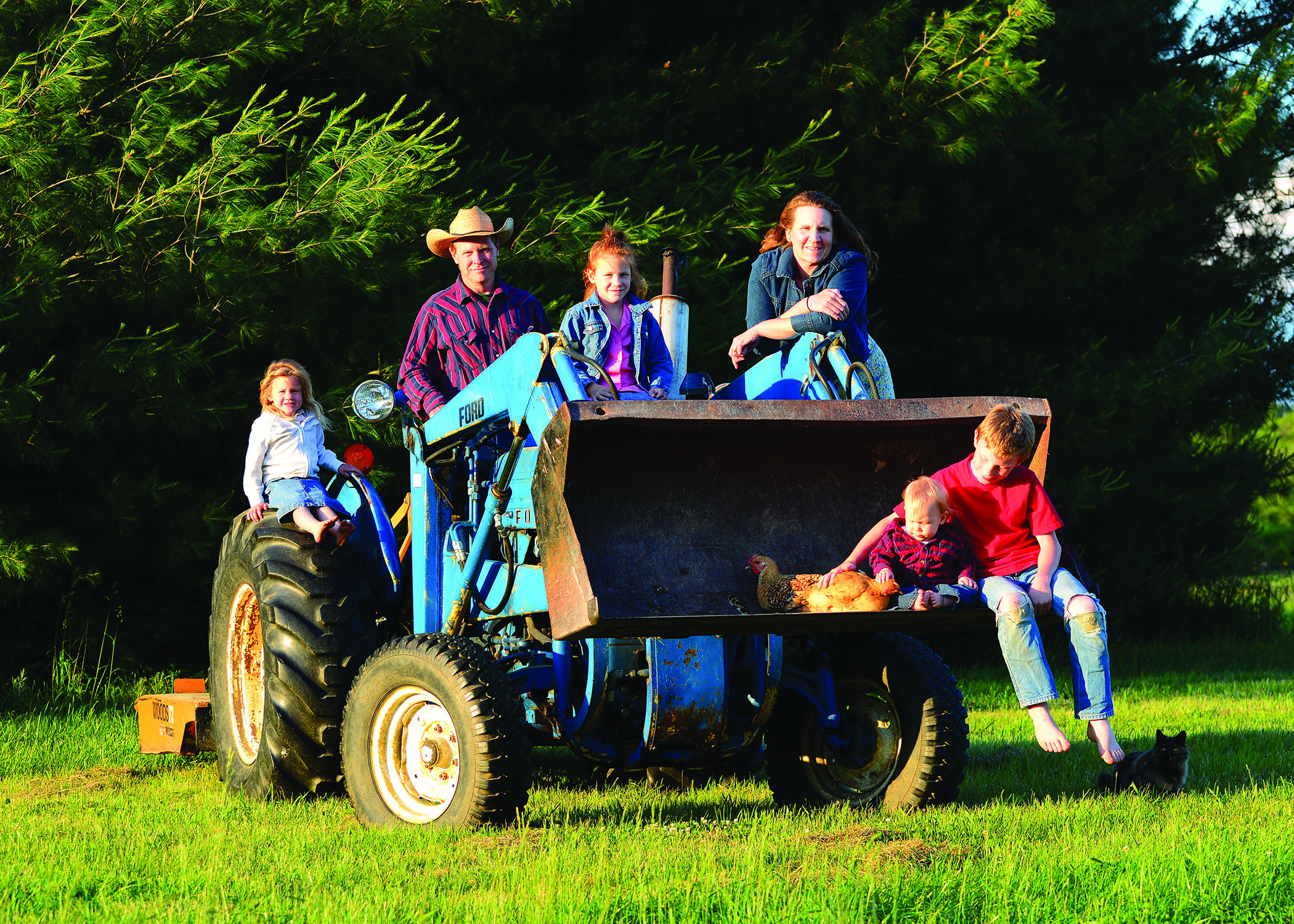
When I arrive at Life More Abundant Ranch, life certainly seems full and abundant. Matt Hardin offers a gripping handshake as three of his four kids bounce over with fresh faces and full smiles. Later Jessi comes out to greet us with their youngest son, who just turned one. They proudly show me the 450 chicks that have been in their brooder for just three days. The fluffy balls of yellow are eating, toddling, drinking, and sleeping in a warm, small shelter with plenty of sunlight pouring in on them. Hardin is teaching his oldest son to care for the chicks and to read their needs in their behavior. “I couldn’t do it without my family, and I wouldn’t want to,” Hardin firmly states.

The farm is their home and place of work. Now in their third year at their farm in Stephenson, the Hardins raise chickens, turkeys, and quails for eggs and meat. Their pasture-raised poultry has a grass-based diet filled with bugs and seeds. Hardin carefully moves the chicken enclosures so that the birds have the freshest, greenest grass to scratch and eat from. Each section of grass is grazed only once a season. With the chicken structures being moved daily or weekly, depending on whether they are broilers or layers, that is a lot of grass!

Hardin is vigilant about taking care of the grass and soil. “Any decent farmer is healing the land.” He considers himself a steward of land that he farms. A student of Joel Salatin, Hardin works to maintain healthy microbial life in the soil and keep the chickens healthy through foraging naturally with plenty of sunlight. Rotating the grazing area allows the birds to fertilize the soil and eat a variety of food—but not overgraze or weaken the soil structure. The fields on the ranch are lush and green. Hardin says they will be the same in August, with the natural manure and weed seeds eaten out of them by the chickens, turkeys, and quail.

The pasture-raised poultry is never given hormones to increase production of eggs or growth. They are never given appetite stimulants. Synthetic vitamins never touch those bird . . . lips. Kelp is used for trace minerals. Even the feed is GMO-free. These are key elements to raising healthy poultry birds and humanely processing them.

The other difference in Life More Abundant Ranch is how they work to educate their customers on why it is important to choose food that is raised humanely without many of the additives that conventional farms use. From listing the various chemicals and interventions factory farms use to raise their poultry to articles about GMO on their website, the Hardins help consumers understand the difference between the practices of these large industrial farms verses smaller, local steward farmers.

Genetically modified organisms, or GMOS, are something that Hardins are especially cautious of—they avoid eating or putting them into their poultry. Briefly, GMOs are created in laboratories where genes from viruses, bacteria, animals, or insects are inserted into the DNA of plants. This new seed is grown and distributed into the food system—and has been since 1996. The United States requires no labeling of food containing GMOs, but the European Union has banned the use of GMO foods altogether.

Many consumers are wary of the outcome of eating food with these modified organisms in them. People are demanding more accountability and transparency from their food producers. Labeling foods would allow customers to choose foods that may or may not have GMOs in them. Some brands, like Cheerios, have changed their ingredients, claiming to no longer use GMO grain.

Knowing your farmers and their practices helps consumers make choices about how to feed their families in ways they feel is best. Life More Abundant Farm works hard to be accountable to their customers and transparent about how they raise their poultry. They even list sites that encourage customers to educate themselves and to “take action” so that lawmakers are encouraged to promote this same accountability throughout the food industry.

Learning through experience, and being a careful observer of their birds, is critical to success at Life More Abundant Farm. Keeping production at a sustainable level and attending local farmers markets creates relationships with the local community and customer loyalty. Their faith and family values are integral in their daily habits and farming practices. Farming, togetherness, and caring for the land is the life of Matt, Jessi, and their family.

Find them at Clarke County Farmers Market and Freight Station Farmers Market, Winchester or by appointment at their farm. Contact info: www.lifemoreabundantranch.com, 443-845-6145, and on Facebook at Life More Abundant Ranch.

From the Tree to Your Table

By Claire Stuart

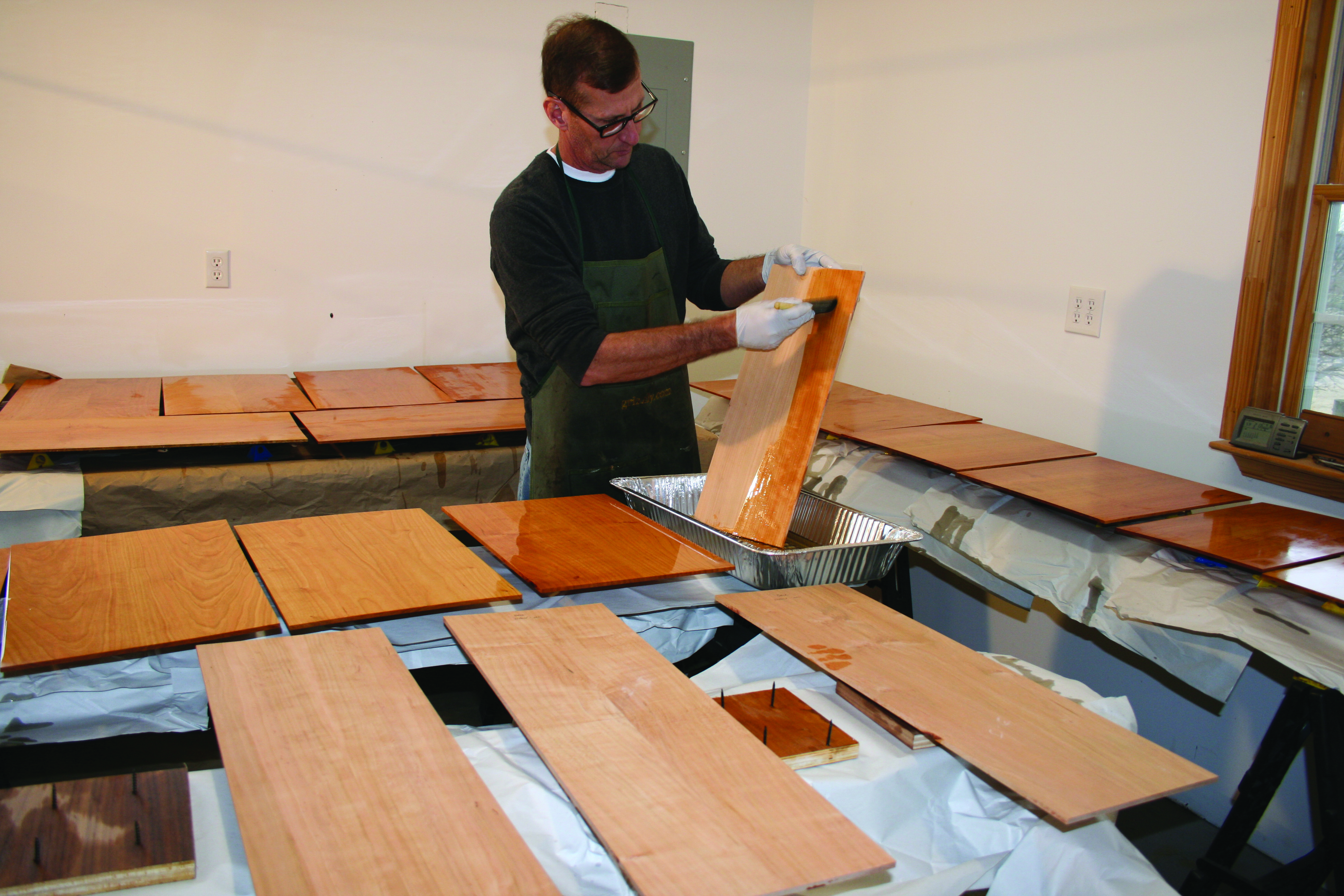
We hear about fresh local food coming from the farm to your table, but have you ever thought about your table coming to you from a local tree? Woodworker Ron Light can show you how it is done. At his home workshop in Boyce, lengths of locally cut logs and stacks of newly milled lumber are waiting to be transformed into hand-made, solid wood tables, chairs and cabinetry.

Light retired in 2011 as a colonel with the U.S. Army Corp of Engineers. After 30 years of rootlessness, he and his wife have made their home in Clarke County, with his longtime hobby of woodworking as a new career.

He has literally put down roots, too, planting his 24 acres with 2,200 hardwood trees, including sugar maple, white and red oak, locust and walnut. He doesn’t expect to be building furniture from the newly-planted trees, since most of them probably will not be ready to harvest in his lifetime. Light sees the trees as an investment for the future of his family and the planet, protecting the soil from erosion, providing a carbon sink, and helping mediate climate change. Trained as an environmental engineer, he is well aware of environmental matters.

The tree planting was no small feat. What had been pasture fields were disked to break up grass mats and destroy habitat of voles (also known as meadow mice) that live in fields and can kill trees by eating the bark at ground level. Then the trees were planted 20 feet apart on a planned grid.

Each tree was planted by hand, with eight workers camping out on the property and planting steadily for two days. Every seedling is enclosed in a shelter tube held in place by a metal stake that had to be driven in by hand. Light noted that the stakes are on the north side of each seedling so that the shelter will never shadow the growing tree as the position of the sun changes.

Much of the wood Light uses for furniture is obtained locally from people with fallen trees or who want trees removed from their property for various reasons. He does not charge for removing trees of the size required for his use.

“If it’s not near a structure or a power line, we fell it,” he said.

In order to be used for lumber, a log must have a diameter of at least 12 inches. That is essential because a log has to be trimmed on four sides to provide a central square that can be milled into eight-inch boards. The trimmings are considered waste and would generally be discarded. Ever mindful of his environmental footprint, Light uses scraps for fence boards or as firewood in his own home.

The logs are cut into eight-foot-six-inch lengths because, he explained, most furniture is less than eight feet high or long. They are then milled into boards that must be dried.

“Milled lumber is 50 percent water,” he explained.

Commercial lumber is dried in kilns to cook out the water, a process that takes about a week. Light air-dries his lumber, which takes a year for every inch of thickness. Stacks of dated boards in various stages of drying fill his drying shed. Dividers separate each board from its neighbors in the stack to allow air flow and prevent bending.

Over the course of a year, all lumber oxidizes to a gray color. When it is ready to be used, it is planed off to make it smooth and restore its color. Boards are milled down to 3/4 inch to get them flat.

“It takes lots of effort to get boards flat and usable,” says Light.

Light’s specialty is solid wood Colonial furniture, but he says he will do anything that a client requests. He notes that the public’s taste in furniture changes over the years, but he reports that he likes Colonial best because he thinks it is timeless. He particularly likes the curved legs of this style. He pointed out a table with “spoon feet” and said that no other woodworker in the area makes them.

Several Windsor pieces are on display in his showroom. He explained that they are made of three different kinds of wood. The spindles and legs are made from maple for strength; the back and arm rests from red oak because it can be bent; and the seat from poplar or pine because it is easy to shape.

Light does a few shows per year and is presently working from orders. He enjoys working at his own pace so that he can continue to enjoy his work without being overwhelmed.

Light’s friend Russell “Rusty” Sears, a fellow retired colonel from the Corp of Engineers, also settled in the area, and they have logged trees together since 2011. Until this year, Light had to haul his logs off premises to a sawyer to be milled. Sears, who operates Red Jack Farm and Mill, bought a portable sawmill, and Light was his first customer. The mill is trailer-mounted; Light describes it as “about the size of a bass boat.” All of the sawdust generated goes to Sears’ farm for bedding for his organically-raised chickens and turkeys.

For a look at Light’s work and more information, visit lighthousewoodworking.com.

Becoming a Montessori Mom

By Victoria L. Kidd

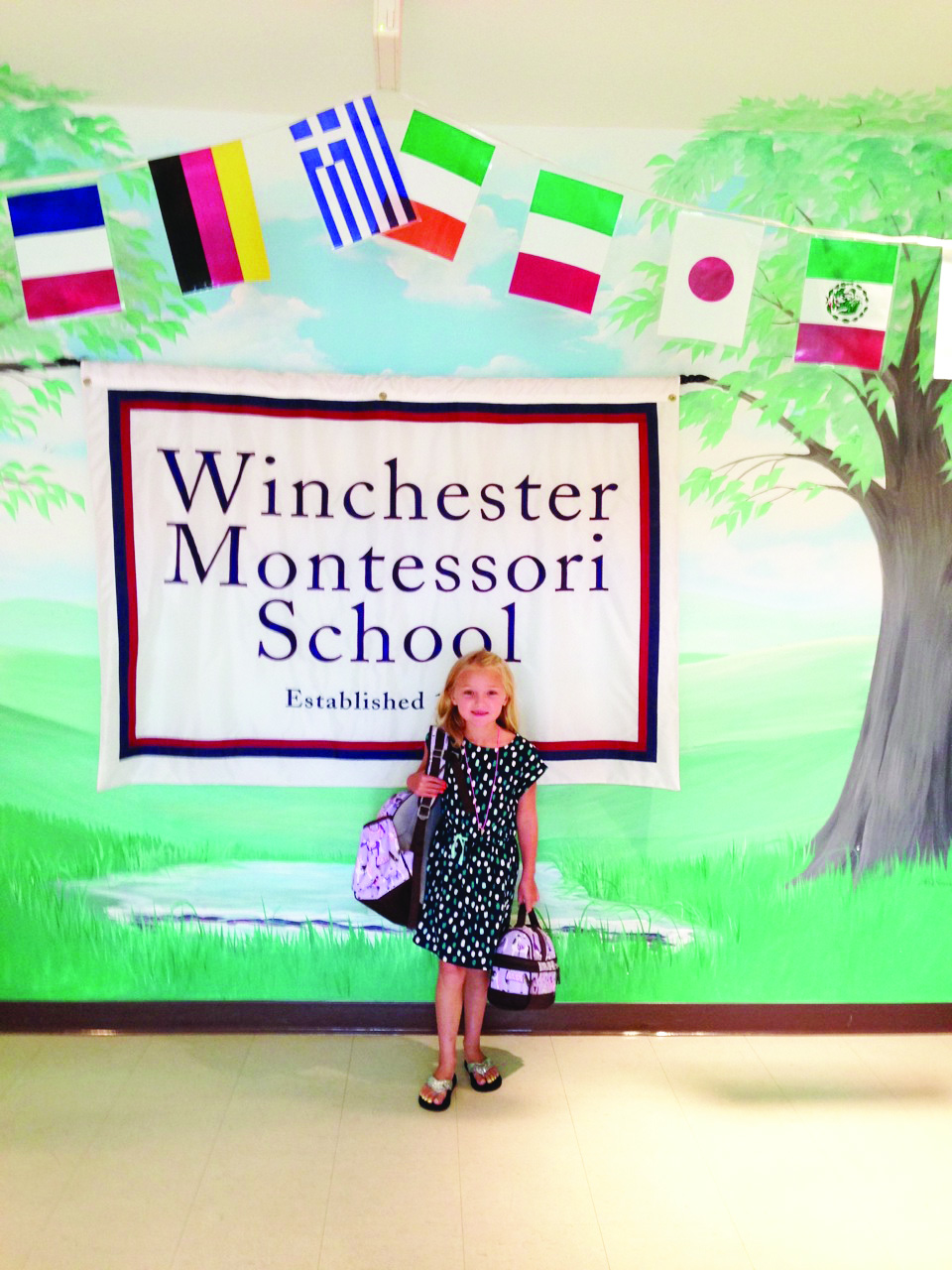
It’s morning, and Berryville resident Kim Lynch is getting her daughter Allie ready for school. Much of their morning will be like that of  other Clarke County families, but they will end up at a school unlike any other in the area. Allie is a student at Winchester Montessori School (WMS) just over the county line on Parkins Mill Road. It’s a school that operates by applying the Montessori Approach to learning, and it has been doing so since 1977.

The Montessori method is often misunderstood, explains administrator Jennifer Sheehy. “Montessori is an approach to education that was developed at the beginning of the 20th century, but it’s still very relevant today. It utilizes the natural learning style of children, and allows students to be active participants in choosing their work in a specifically designed classroom environment.”

That environment—termed as the “prepared environment” in Montessori circles—is designed to provide the child freedom within a definite structure. “The child is allowed to choose work, but is not free not to choose,” Sheehy explains to dispel the myth that there is no structure to a Montessori student’s day. “The teacher is always a few steps away, monitoring the student and encouraging them to explore learning in a way that is natural for their inquisitive selves.”

Those choices occur within the context of the five basic areas of the prepared environment offered to them. These areas include practical life, sensorial, language, math, and cultural activities. The practical life area, for example, includes materials that allow the child to become independent and responsible for himself in the surrounding environment. (Activities in this area include dressing skills and other self-care tasks.) By contrast, the sensorial area helps students create order internally while making sense of the impressions he or she receives. (Accordingly, the student will work extensively with color, pitch, and dimension.)

Every detail of the environment at the WMS, and other Montessori schools across the country, is specifically designed to capitalize on the natural way children learn. It’s the way the Montessori philosophy—which we have only briefly introduced here, as there is much more to it—focuses on the student that attracted Lynch to the school.

“My husband and I researched many learning methods and schools before choosing WMS,” she says. “We wanted an educational environment that would deliver high standards of learning while, at the same time, be kind and loving to our daughter. We wanted a school that would impart the love of learning upon Allie, so that education was something she valued for a lifetime. And we wanted a school that partnered with us in helping to instill values, kindness, and empathy for those around her, as well as a knowledge and respect for the world we live in. We were fortunate enough to find that in Winchester Montessori School.”

One thing many Montessori parents like Lynch will tell you is that their children enjoy going to school. Such was the case with Sheehy’s children, and that is what got her started on a path that would eventually change the course of her career. “My kids were members of the first class when the doors opened in 1977,” she explains. “My daughter was only two, and there were only eight kids in the class that first year. I remember that she would wake up each day asking, ‘Is today a school day.’ That really made me realize that there was something special here. By the end of that first year, I wanted to learn more and wanted to share that ‘something special’ with other parents and their kids.”

The school’s founder, Mary Whitesell Horton, operated the school out of a classroom rented from Christ Episcopal Church those first few years, but increases in enrollment would force the school to seek a more suitable location in 1981. It would subsequently move to two other locations (on Weems Lane and later on Henry Avenue) before growing to a point that necessitated a truly dedicated space.

With a waiting list of over 30 children of preschool age in 1999, the time had come to think about moving to a purpose-built location. In October of 2003, WMS opened the facility at West Parkins Mill Road. The school can accommodate 125 students, although enrollment numbers vary each year. WMS deploys an instructional method that includes mixed age, three-year programs, which is designed to encourage cyclical commitment, as students are building on the skills and knowledge gained in the previous year. Older students are encouraged to assist the younger students, fostering an ability to cooperate, as well as the ability to teach/train (in the case of the older students) and the ability to learn/listen (in the case of the younger students).

“When you are able to teach something,” Sheehy says, “you really, really know it. Furthermore, the younger student learns that if you don’t understand something or if you do not have the skills to accomplish something, you should seek the input of someone who does . . . It’s really a clever means of helping kids learn to work out problems, get excited about learning from others, and use their natural curiosity to fuel learning.”

Lynch believes this foundational element of WMS’s teaching methodology has been invaluable to her daughter. “We credit WMS in helping us to impart important, fundamental knowledge and social skill sets upon our daughter,” she relays. “Allie is able to interact with concepts and ideas versus simply memorizing facts. The education model and delivery of this model, has taught Allie to think for herself and to imagine a new way to do something. Allie learns for herself, not just because she is told to do so. She is imaginative and logical, all at the same time!”

Perhaps the biggest value Lynch has seen is in the advanced life skills and confidence her daughter demonstrated even from her earliest involvement with the Montessori classroom. “WMS has helped prepare Allie for everyday life, teaching her practical skills and giving her purpose in achieving those skills. She is able to contribute to her class, her family, and the world. At three years old, Allie was able to set the table by herself, dress herself, and interact with people of all ages. Today, at age seven, she is articulate, well versed, and we are often told that Allie is special. We agree!”

Seeing the growth of each student, including Allie, is very meaningful to Sheehy and the rest of the staff. Perhaps her commitment to that individual growth is best demonstrated by the answer she gives when people ask her about what the future holds for the school. “I would love to see the classes full all the time,” she says, “but not just because of the business considerations associated with running a school. Montessori has so much to offer every child. When you have worked in the Montessori classroom for as long as I have, you see it in each student. The student is the entire focus of the learning environment. It’s about learning for life and learning for personal achievement. That’s really something special to be a part of.”

To learn more about the Winchester Montessori School (including offered before- and after-school care), visit www.winchestermontessori.com or call 540-667-1184. Sheehy, along with numerous Montessori parents whose children have been a part of the school’s classes throughout its nearly 40 years in operation, will be happy to help you see if the Montessori approach to education is right for your family.

Social Graces Gets New Home

By Heidi Lynch

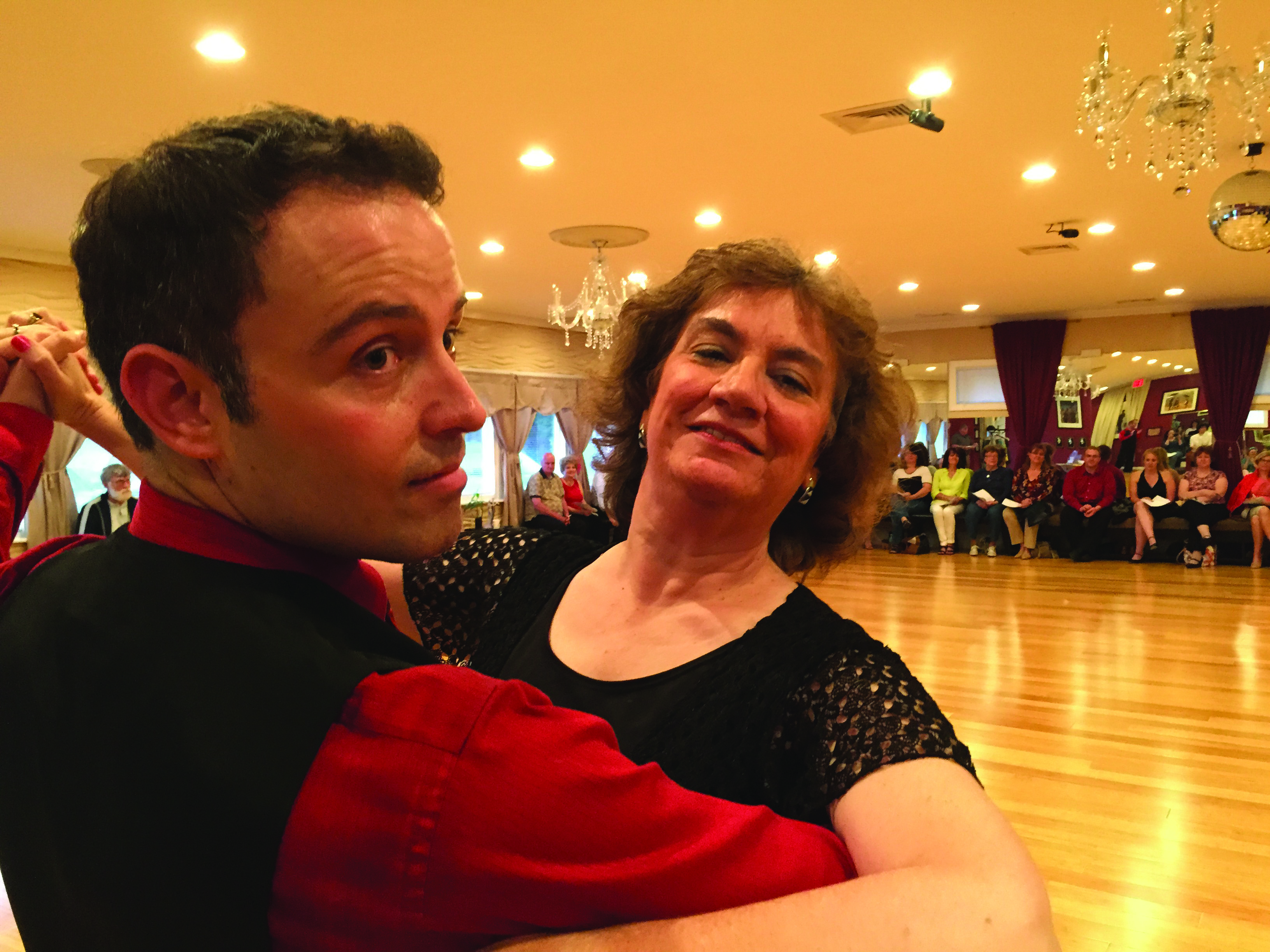
Imagine the golden pooling of afternoon sun on smoothly planed floorboards. See the glint and sparkle of crystal chandelier drops as they dangle above. Brush against the velvet folds of drapery and you have the perfect setting for . . . a traditional Native American dance? Perhaps this pairing appears incongruous at first glance, but delve a little deeper into the renovation story of Social Graces Ballroom Studio’s new location and the combination makes sense.

Freddie Ciampi, who discovered a love for dancing while in a performing arts group at college, started Social Graces 15 years ago. “It was a small scale business with only one instructor,” he says, “but there’s something magical about dance. It created its own community of friends.” Now the studio has moved to 639 E Main St, Berryville.

Community drives this studio. While Social Graces offers opportunities for competition and performance, the studio’s name announces its principal value: dance in a social setting.

“Our focus is people dealing with people, and offering students a challenge, exercise, a chance to learn,” says Ciampi. “We focus on the human condition. Students here don’t care how good you are; they care how nice you are.”

It’s no surprise, then, that this dance community has grown to include seven instructors and more than 150 students. The growing dance family is not only the driving force behind the studio’s move to a new and larger space, but also part of the work force for renovating that space. Ciampi estimates that more than 30 volunteers, all students of the studio, gave freely of their time to pour concrete, paint parking lines, and hang chandeliers.

“Why would people be so adamant about helping this business if not to contribute back?” he asks.

This giving of time and resources, this concept of contribution, is something on René White-Feather’s mind, as well. She is president of the Native American Church of Virginia and executive director of The Harvest Gathering, a 3-day celebration of Native American people and neighbors through dance, storytelling, and various social interactions. The goal behind The Gathering includes preserving and sharing traditions from generation to generation. René compares culture to a seed being planted in the ground.

“This ‘ground’ is community,” she says. “This area, this county, this state is the ground in which the seed is planted. The volunteers and organizers of The Gathering events are the planters of this seed.”

So what about those chandeliers and drapes mentioned above? How does the planting of a seed relate to a swanky ballroom? White-Feather views Social Graces’ grand opening as a preview of The Gathering. The grand opening will feature dance lessons and performances throughout the day, including the performance of a traditional Native American dance. Lenny Harmon, a local Native American Indian of the Nanticoke Lenape people, is scheduled to perform at Social Graces, allowing participants a quick glimpse into the spirit of October’s bigger event.

“Ciampi is supporting, and has caught the spirit of, The Gathering,” René says. “He is contributing of himself.”

René hopes to see more and more community embrace the seed of culture being planted. She asks, “How can you contribute of yourself? Who else has caught the spirit of The Gathering?”

The Social Graces Ballroom Studio’s Grand Opening starts Saturday, June 27 at 10am, and runs through the week. For information visit Berryvilleballroom.com or call 540-409-7136. The studio is located at 639 E Main St, Berryville.

Enjoying the Quiet of Berryville at Waypoint House

By Samantha Pigott

Ask Rachael Worsley, who, with husband Jonathan, operates Waypoint House B&B in Berryville, if they are Berryville natives, and you’ll get a reply that every transplant who has found their sense of home in Clarke County can appreciate. “No, but we got here as soon as we could!”

When Jonathan and Rachael Worsley met in college, they didn’t plan for the road of life to lead them to own and operate Waypoint House. The Worsley’s look at themselves as custodians of the home built in 1884 at 211 South Church Street. Nanny Maguire, who was a local piano teacher, first owned the home. They have found remnants of the packaging crate from a piano delivered to Maguire, addressed simply Nanny Maguire, Berryville Virginia.

They are the sixth owners of this beautiful home, and are diligent about its preservation. Both agree that when they were looking for a property, this was love at first sight. The original heart pine floors, the history, and beauty were exactly what the Worsleys’ had been searching for.

The three guest rooms are well appointed and cozy. Each room has a private bath and television (not always the norm for B&Bs). The Worsleys’ aim is to offer their guests a relaxing luxury experience. Rooms are equipped with USB ports, and the entire property has access to wi-fi. There is a beautiful weaving of authentic history and modern necessity.

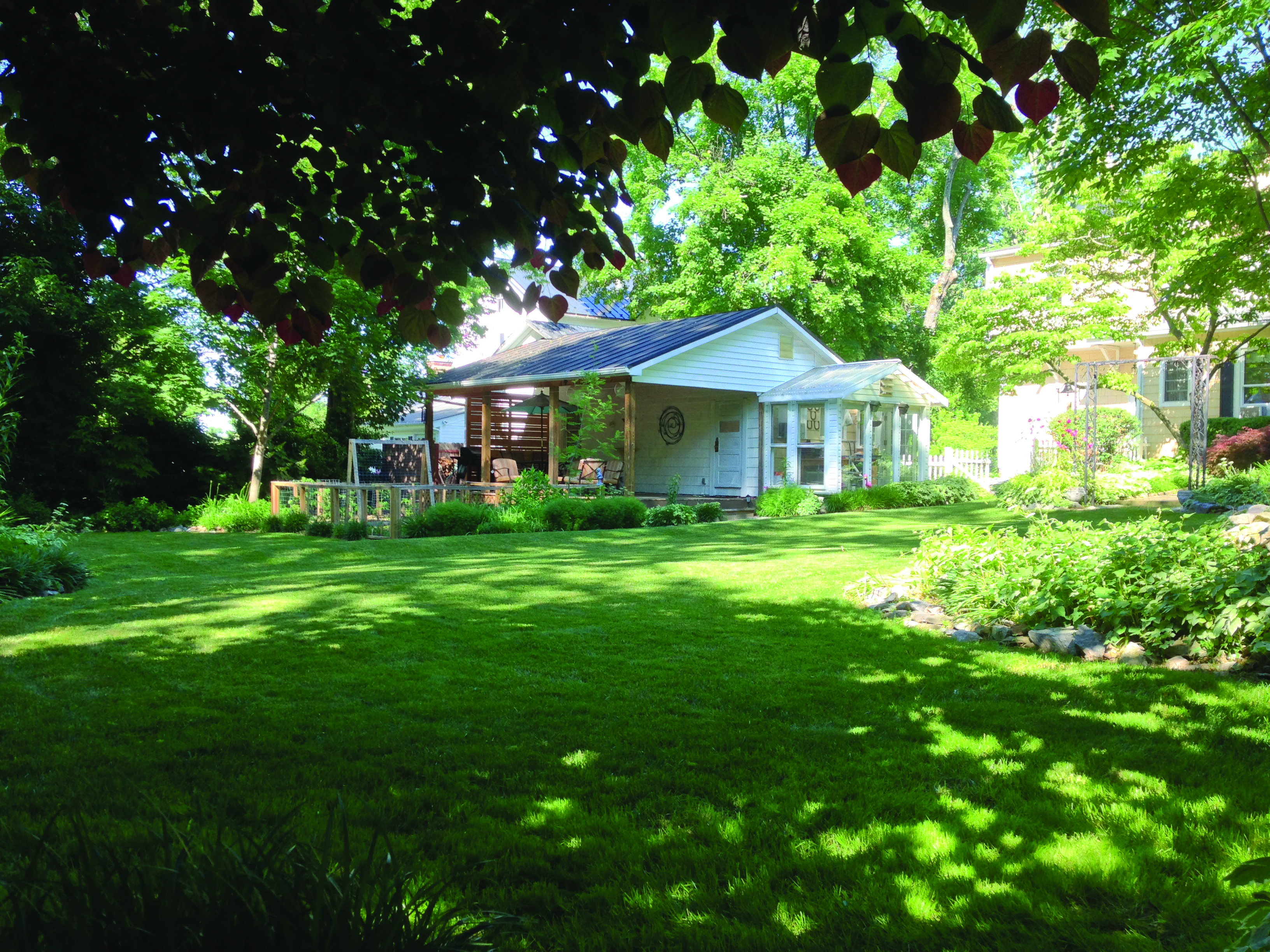
The grounds are peaceful and inviting, including a delightful back deck area for reading or socializing tucked away beside the greenhouse. Rachael uses the greenhouse and garden patch to grow herbs and veggies that she uses in her cooking for guests. Rachael’s background in catering shines through her menu choices.

Nearly all her ingredients are locally sourced. She has an egg delivery lady, and if Rachael doesn’t grow it she can often find it at the farmers market. The guestbook is full of praise for the breakfasts—like savory ricotta and chive scramble on homemade bread or baked cinnamon French toast. In keeping with the personality of the operation, Rachael serves breakfast around her guests requests. It’s not ‘what time is breakfast served, but what time would you like breakfast?’

The range of guests has been remarkable, over the past three years. “We have had all sorts of people from all around the world here,” says Jonathan. His favorite was a photographer from National Geographic who admired some of Jonathan’s own photography that lines the walls of the dining room and is scattered throughout the house. The pictures are just another personal interesting touch.


Rachael has gathered a full lineup of places and things to do in and around Clarke County. She says many guests come for a getaway from the demands of city living, but haven’t thought of what they will do once they get here. Rachael then puts on her tour guide hat and becomes a kind of ambassador for Clarke County to the guests. “We love to share Clarke County with people,” she said.

Waypoint house is also pet friendly. While canine guests are the norm, the Worsleys have also hosted two cats, whom the couple found to be lovely guests and would be welcome back any time.

The Waypoint house is a beautiful and affordable place to stay while passing through. It’s also a terrific option for out-of-town family coming in for a visit.

Rooms range from $125 to $235 per night, including breakfast, depending on the room and the season. For information give Rachael a call at 540-955-8218 or check out www.waypointhouse.com.

This Gathering Is For Everyone

American Indian living legend to moderate the Harvest Gathering,

By Victoria L. Kidd

One of the best parts about living in the Northern Shenandoah Valley of Virginia is that you don’t have to go far to experience history. While that experience is mostly received through exhibits, sightseeing, and other activities that are largely passive in nature, residents occasionally have an opportunity to experience history intimately. Such an experience is coming up this fall.

From October 30 to November 1, the Clarke County Fairgrounds will host The Harvest Gathering (referred to as “The Gathering”), an educational celebration of what’s being billed as “agri-culture.” The term speaks to the two facets of the event—a traditional indigenous outdoor Harvest Dance and living history/cultural exhibition partnered with the agriculturally significant Virginia Gourd Festival. This year marks the 14th year the Virginia Lovers’ Gourd Society has presented the Virginia Gourd Festival at the beginning of Native American Heritage month, and the synchronicity of the two serves to educate the public about the native roots gourds have while demonstrating their contemporary uses.

The weekend will be filled end-to-end with experiences that don’t come along everyday. Participants can join a gourd workshop, listen to Native American singers and drummers, eat foods that are culturally significant to native peoples, sample locally produced honey and other foods, and participate in a communal demonstration of thanks for the harvest before winter. The schedule includes many more activities than can be listed here, but perhaps the most significant opportunity attendees have is the chance to interact with Dennis Banks, a person considered to be a living legend among many Native Americans.

The fact that Banks will be the Master of Ceremonies for the event is “significant,” according to René White-Feather, president of the Native American Church of Virginia and executive director of The Harvest Gathering. In 1968, Banks cofounded the American Indian Movement (AIM) alongside other Native Americans in Minneapolis. He has a long history of advocacy (and at times controversial activism) seeking to address racism and to increase national awareness of Native American issues. He is perhaps best known for leading the 1973 armed occupation of Wounded Knee, the site where U.S. troops had murdered a band of Lakota men, women, and children just 83 years earlier.

Event organizers are excited to have a figure of such national and historical significance moderating an event they perceive to be historically significant in and of itself. For them, the event is comparative to a seed planted in the hope that an increased sense of brotherhood and community among local people and those travelling to the event will grow. Chris (Comes With Clouds) White, spiritual leader and Elder of the Native American Church of Virginia, says, “This is a seed of grand possibilities in human-hood that we are planting. It’s my hope that the seed finds good ground, and I rely on God to bring the increase.”

René uses the term “spiritual phenomenon” when referencing the event because it’s really a convergence of many people from different belief systems, backgrounds, ethnicities, and cultural identities. “Each of us on the Elders Council and others feels a calling towards an elevated spirit in humanity that is fueled by our deep personal desire to create something good for humanity,” she says.

That “something good” may share similarities to the iconic 1621 harvest celebration that school children learn about in school, but The Gathering is not intended to be a recreation of what is often referred to as the “first Thanksgiving.” René relays, “We look back at the first Thanksgiving as a spontaneous act of goodwill involving giving thanks to God by two culturally diverse peoples. It speaks to our heart and we commemorate it as an unprecedented way of being with strangers that are not like us. It strikes a chord in the core of humanity. That’s why we don’t want to act out or mimic what was, although that was good. ‘The Gathering’ is an experiment in humanity, to check the state of community within our community now.”

As such, the event is really one that will be defined by participation—participation by those who join the festivities, participate in the activities, and endeavor to witness firsthand the idea that we are all a lot more alike than we are different. “It’s about you and your participation,” Chris says. “When someone participates in planting seeds, they also have claim on a portion of the harvest.” In this case, the harvest is a greater sense of community, and as René says, “preserving our agri-culture, heritage, stories, and art is about sharing what we know and passing it on. This defines the richness of our culture for generations to come.”

Consistent with a generational view of the impact these types of events can have, the organizers have set aside the first day of the event as a “school day” when school-aged children and youth will be able to participate in planned activities. René explains, “Children will learn tons of things they didn’t know that they didn’t know.” From learning about various animals and plants to participating in activities related to humanities and anthropology, students will have a chance to engage in hands-on learning. (Students also have an opportunity to participate in available internships. For more information, visit http://harvestgathering.org/the-basket.html.)

The public is invited to Saturday and Sunday’s activities, and it is certain that attendees will experience something new. New activities and opportunities are being added each week, and interested persons should visit www.harvestgathering.org. While there, be sure to click on the Basket tab and subscribe to their online magazine, The Harvest Basket. Most importantly, mark your calendars to experience history and contribute to this culturally significant weekend.

612 Vineyard, A Place for the Community

Story and photos by Claire Stuart

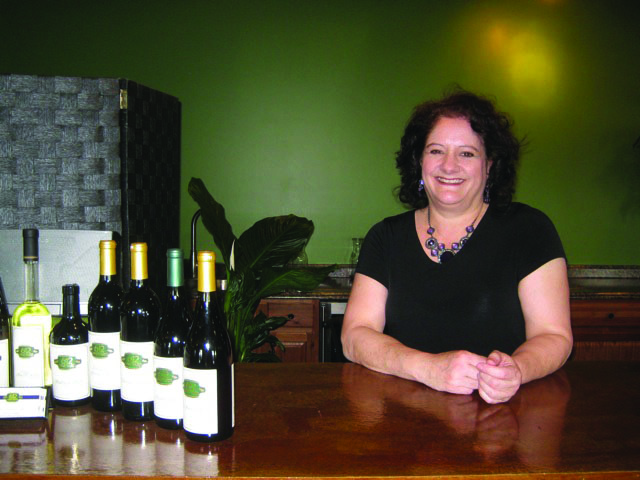
Lisa Adams never expected to someday be operating a winery when she and her family bought a farm in Clarke County in 1996 as an escape from the city. There was an old farmhouse on the property in poor shape, so in 2007, they finally knocked it down and built a large new home.

Then, in 2011, her husband passed away, leaving Adams with the farm, a big house, and three teenage children. She pondered her options, wondering what to do. Someone suggested that she look into the winery business, something she’d never considered and knew nothing about, except as someone who enjoyed wine.

Adams gives praises to the agencies that helped her navigate her way into business. “I got help from the Small Business Administration in Fairfax,” she said. “I can’t say enough for what they do, and it’s free to businesses.”

Virginia Cooperative Extension referred her to the Virginia Wineries Association, who introduced her to winemaker Randy Phillips, owner of Cave Ridge Vineyard in Mt. Jackson.

Phillips has been making small quantities of high quality wine for over 20 years, and he happened to be looking for a winery to make wine for. With some remodeling, the large basement of Adams’ home was transformed into a spacious tasting room looking onto a patio with a fabulous view of the Blue Ridge. The 612 Vineyard came into being in March 2014. Phillips serves as winemaker and Adams does marketing, budgeting, and events.

Adams continues to work hard to learn about the business from Phillips. She goes to Cave Ridge Vineyard periodically to do everything from picking grapes to barreling. She enjoys learning about grape varieties and their relationship to the weather that gives a specific character to each year’s wine.

“It’s fun to have new things,” she says. “Wines depend on how the weather changes from year to year.”

Adams says that in her first year she primarily concentrated on learning about the business. This year, she has stressed marketing, meeting local businesspeople, and finding ways they can work together. She has focused on establishing her winery’s “personality,” as a place for community activities and classes. In February, they held a chocolate tasting; in April, a kickoff event for the Relay for Life and a pet adoption event.

Last year, Adams offered painting classes. This year, a wine tasting class (including a book) is in the works, as well as a flower arranging class with an arrangement to take home. Class offerings may change, depending on the response. The new herb garden will allow guests to pick fresh herbs. Blackberries and red and black raspberries will be growing for guests to pick and to be added to enhance wines.

The grounds and tasting room are available for events such as fund-raisers, business meetings, and dinners, weddings and birthdays. The tasting room can accommodate about 60 people; another 50 or 60 can be accommodated outside and on the porch—and still more in the picnic area and field. Outdoor weddings can be tented, and Adams hopes they might have a permanent shelter next year.

Live music is featured on weekends, with a wide variety of regional artists. Offerings vary anywhere from standards to rock, flamenco, jazz or blues. A picnic area is available to customers, and outside food may be brought in.

Adams knows how people love their dogs, so well-behaved dogs are welcome at all times, subject to some breed and size limitations dictated by insurance (see the website for dog policy). Four Paws Sundays are extra special dog days held the fourth Sunday of every month, April through October. Guests are invited to bring their dogs for an entertaining day featuring free dog treats and fun events for dogs and their owners. Dogs must be on a leash and are not allowed in the tasting room. On Four Paws Sundays, a wine tasting area is set up outside.

Adams strives to keep the operation as “green” as possible. All used wine bottles are recycled, as are plastic bottles, cans and cardboard boxes. They will continue to look for ways to reuse and recycle even more and will look at possibilities for solar energy options in the future.

Adams’ whole family is involved in the business. Son Tyler, 16, is a musician; he plays guitar and sings. Daughter Tifani, 15, works behind the counter (but cannot pour wine). Son Cody, 14, helps make wine snacks and does cleanup.

Some of 612 Vineyard’s wines include Chambourcin, Cabernet Franc, Traminette, Chardonnay and Riesling. At present, they are only available on site, but Adams hopes that by fall they can be sold in local outlets.

612 Vineyard is located at 864 Shepherds Mill Road (Route 612) just east of Berryville. Hours are Friday through Sunday, noon to 6pm. For information on events and activities, see www.612vineyard.com.